.png)
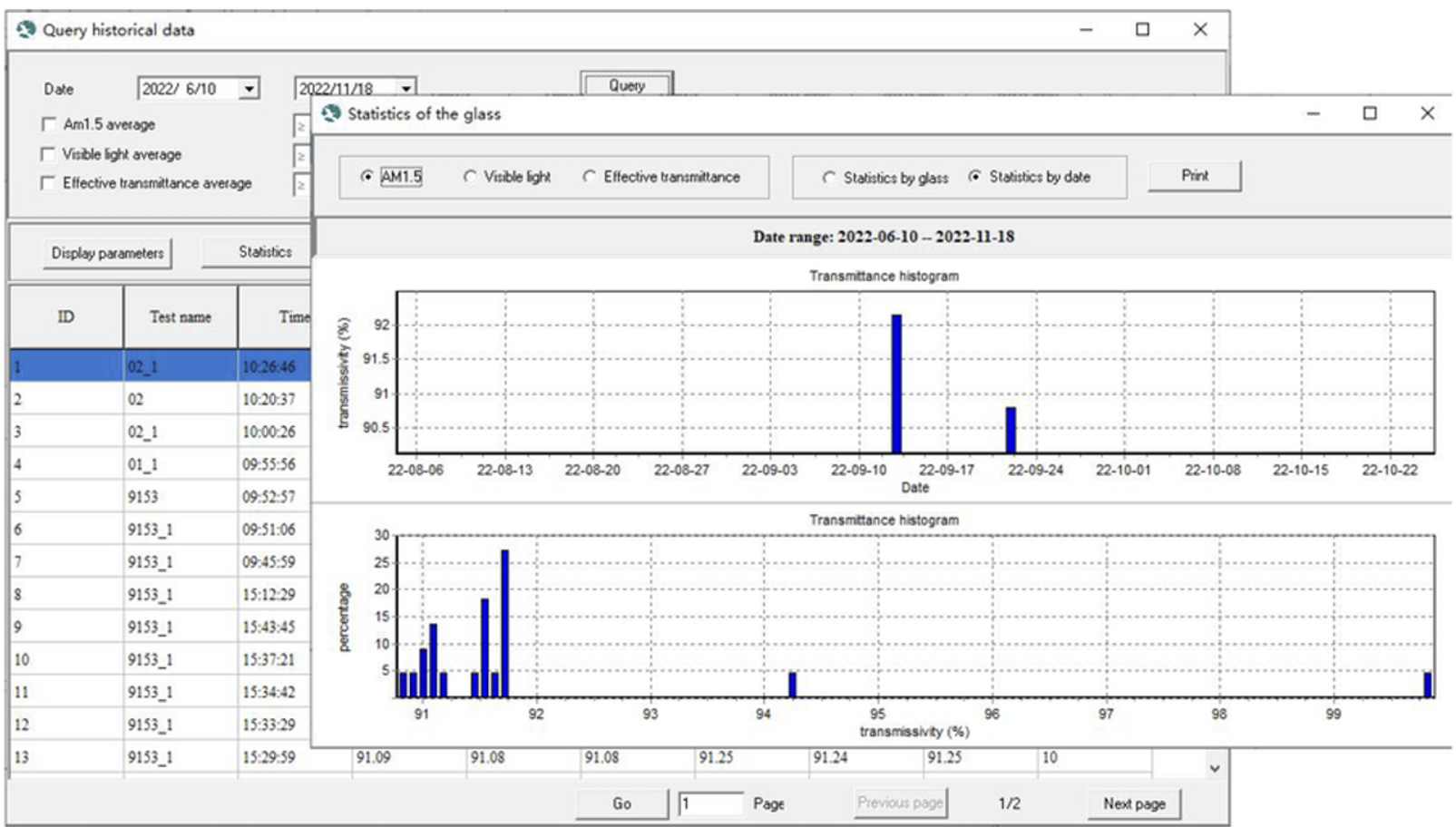
Connect measurement results with test time, production records and quality decisions.
Measurement traceability means that a test result can be connected to its testing context.
In glass production, this may include test time, sample identity, production batch, shift, line, operator or inspection condition.Traceability helps a result become more than a number.
It becomes part of the production record.
When a quality issue appears later, teams need to know whether it was isolated or part of a wider production trend.
Without structured historical records, investigation may depend on memory, screenshots, handwritten notes or disconnected files.
Traceable records make it easier to compare results over time and understand how quality changes across production periods.
Many inspection workflows still rely on fragmented records.
A result may be measured correctly but saved poorly.
File names may not be standardised.
Reports may be stored in different folders.
Operators may use different formats.
This makes later review slower and less reliable.
LUARI systems support structured result saving, automatic reporting and time-based file naming.
This helps factories build a clearer connection between measurement results and production history.
Quality teams can use stored reports to review trends, compare shifts and support customer communication.
.svg)